
Márcia
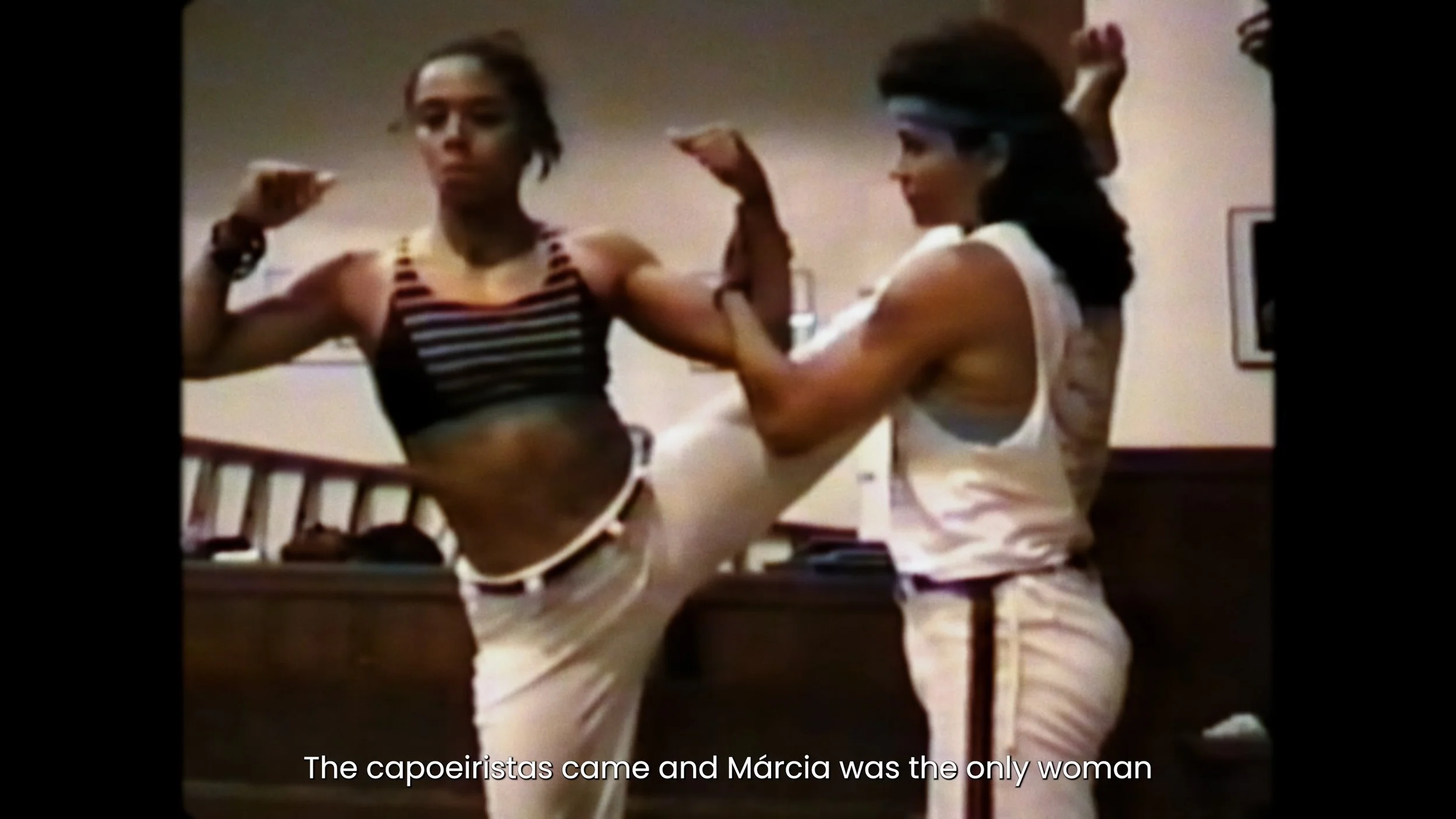
Márcia's story is told through never-before-seen archival images and the voices of her lovers and friends, from a childhood saved on the streets of Brazil in the 60s until she became one of the first and most talented capoeira practitioners in the world, paving the way for women and queer people in this art.
This short film was funded in part with the San Francisco Arts Commission Artist Grant.
Produced by La Casa Films.
Directed and edited by Claudia A. Escobar.
Sound Design and Music composer Audrey Nieh.
Graphic Design: Paola Rojas
Color grading: Robert Arnold
Márcia unfolds through rare, unseen archival footage and intimate first-person narration to reveal the untold story of one of the most influential women in the global capoeira community. Woven with the voices of her lovers and friends, the film traces the fierce loves and unlikely alliances that sustained Márcia and fueled her fight to carve a path for women in a world that had long excluded them.
Her memories begin in the wild streets of 1960s Rio de Janeiro—an era of dictatorship, economic collapse, and constant danger. For a child who knew no other life, the city was electric. But everything changed the day her mother brought her to a house where she cleaned, left her there, and never returned. Adopted by a woman in her fifties who renamed her Márcia Treidler and tried to mold her into a porcelain doll, Márcia pushed back at every turn, restless and untamable.
Meanwhile, all across Rio, capoeira was erupting in parks, alleys, and empty lots—roaring rodas where bodies became instruments of defiance. To the elite, capoeira was the domain of thieves and street kids. To Márcia, it was liberation. At fourteen, she struck a deal: if she kept her grades up, she could train. She soon found herself studying under Mestre Camisa, founder of ABADÁ-Capoeira—the movement that would carry the art form onto the world stage. Márcia became part of that wave.
By 1988, already a rising figure in Brazil, she traveled to San Francisco—and fell in love for the first time, with dancer and choreographer Amara Tabor-Smith. In Brazil, being openly queer felt impossible; so did immigrating. In the U.S., she traded visibility for invisibility, building a life in the shadows—working construction jobs while creating art, community, and a new identity.
What followed were years of border crossings both literal and emotional: new life changing loves, profound heartbreaks, improbable achievements, and a relentless devotion to the art form that had saved her. Against all odds, Márcia became a central figure in the global expansion of capoeira—and a model of resilience for generations of women and queer practitioners who followed.
Spanning continents and decades, Márcia is a story as vast, messy, and queer as the woman at its center. It is a history that has never been told—until now.